Hey there, fellow speed enthusiasts! As someone who lives and breathes everything racing, from the intoxicating scent of high-octane fuel to the pulse-pounding thrill of pushing limits, I’ve often found myself deep in thought about a fascinating question.
We’re living in an era where the virtual world has truly exploded, and with it, the incredible realism of sim racing. I mean, who hasn’t wondered exactly how close the digital asphalt gets to the real thing?
It’s a conversation I’ve had countless times with friends, especially now that professional drivers are spending more time in their sophisticated rigs.
The feeling of nailing that apex in a simulator can be incredibly visceral, almost making you forget you’re not actually risking it all on track. But what about the true G-forces, the unforgiving nature of a real-world mistake, or the sheer financial commitment?
The gap between virtual and real used to be immense, but with today’s mind-blowing graphics and physics engines, it feels like we’re constantly blurring the lines.
Let’s peel back the layers and uncover the definitive truth about how these two worlds stack up against each other.
The Raw Thrill vs. The Refined Simulation
Let’s dive right into the heart of the matter: the sheer *feeling* of it all. As someone who’s spent countless hours both in a sim rig and out on actual tarmac, I can tell you there’s a fundamental difference in the sensory experience.
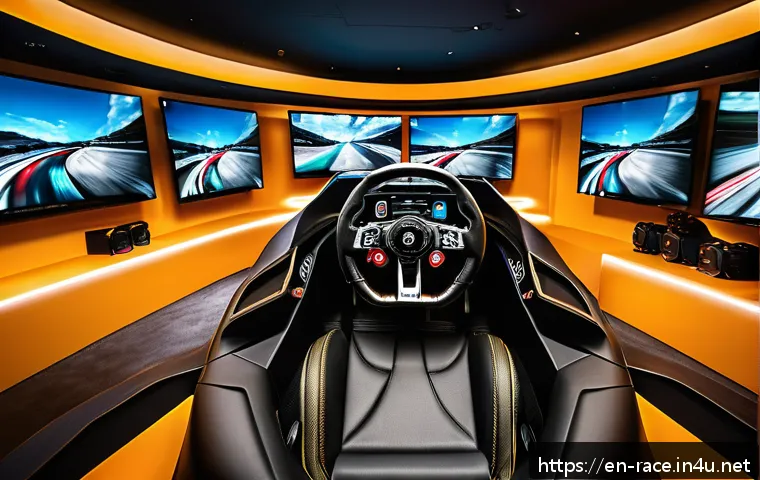
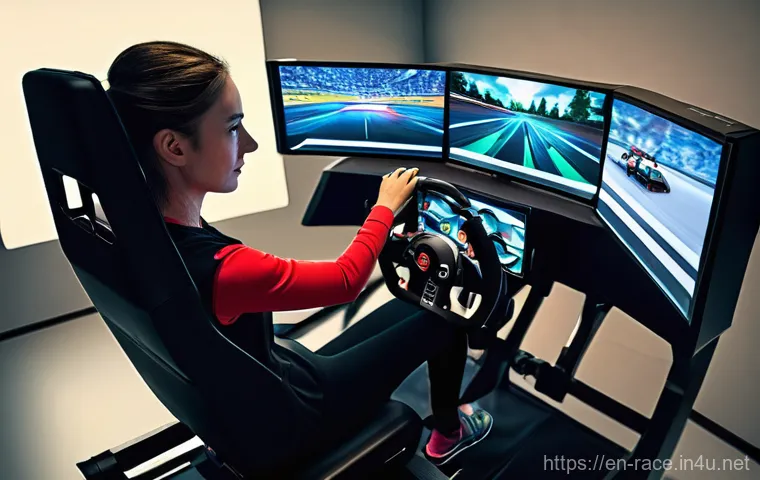
In a simulator, you’re absolutely dialed in, focusing on visual cues and the nuanced feedback from your force-feedback wheel. You feel the tire slip through the wheel, you hear the engine scream, and if you’ve got a decent setup, you might even feel some vibrations.
It’s incredibly immersive, no doubt. But then there’s real racing. Oh, real racing.
It’s an assault on every single one of your senses. The smell of burning rubber and high-octane fuel isn’t simulated – it’s real, and it fills your lungs.
The car bucks and writhes beneath you, transmitting every bump, every curb, every micro-traction loss directly through the seat of your pants and up your spine.
It’s a full-body workout, a dance with a powerful machine that responds to your every input, but also challenges you in ways a sim simply can’t. That feeling of hitting an apex perfectly, the car rotating just so, and then planting the throttle, feeling the tires bite and the G-forces push you back into the seat…
it’s truly something else. That’s the part that separates the two more than anything else for me.
The Unpredictable Edge
One of the most profound differences I’ve experienced lies in the sheer unpredictability of real-world racing. In a simulator, while physics engines are incredibly advanced, there’s still a degree of calculated behavior.
You learn the limits, you push them, and while you might make mistakes, the consequences are always, well, virtual. Out on a real track, however, you’re constantly contending with ever-changing variables: a stray piece of debris on the track, an unexpected gust of wind, a slight variation in track temperature affecting grip, or even just another driver making an error beside you.
I remember one time, mid-corner, a bird flew directly across my path – a tiny moment, but it’s those real-world, unexpected elements that keep you absolutely on edge, demanding a level of reactive decision-making that no sim can fully replicate.
This unpredictability breeds a heightened sense of awareness and an adrenaline rush that is simply impossible to fully package into a digital experience.
The Sensory Symphony
When you’re strapped into a real race car, it’s not just about what you see and feel through the wheel. It’s a symphony of sensations that hits you from every angle.
The roar of the engine isn’t just a sound coming from speakers; it’s a deep, resonant vibration that permeates your entire body. The heat radiating from the engine bay, the wind buffeting your helmet at insane speeds, the faint scent of oil or brake dust – these are all critical pieces of the puzzle that inform your driving and create an unparalleled sense of immersion.
Trust me, I’ve got a pretty high-end sim rig at home with motion platforms and tactile transducers, and while it gets impressively close, it still doesn’t quite deliver that full-spectrum sensory overload.
It’s like comparing a high-definition concert recording to being right there in the mosh pit, feeling the bass drum in your chest. Both are great, but one is undeniably more raw and immediate.
Breaking Down the Bank: Real vs. Virtual Budgets
Let’s talk brass tacks, because this is where the rubber *really* meets the road, or rather, where your wallet meets the track. When we chat about sim racing, the initial investment might seem steep.
You’re looking at a decent PC, a good wheel and pedals, maybe a racing seat, and perhaps even a full motion rig. You could easily drop a few thousand dollars on a quality setup, and if you go all out, well, the sky’s the limit for enthusiast-grade gear.
But once you’ve made that initial plunge, your ongoing costs are relatively minimal: electricity, internet, and the occasional game or track pack. Compare that to real racing, and it’s like comparing pocket change to a small fortune.
I’ve seen friends go through entire seasons, and the numbers are staggering. Just getting a proper kart for local racing can set you back several thousand dollars, and that’s before you even buy tires, fuel, entry fees, safety gear, and pay for repairs.
Gear Up: The Cost of Entry
For sim racing, getting started can range from a few hundred bucks for a basic wheel and pedal set on your existing console or PC, all the way up to tens of thousands for a full-blown professional-grade simulator with direct drive wheels, hydraulic pedals, and a multi-axis motion platform.
I started with a simple Logitech wheel back in the day, and it was great for learning the basics. Now, my current rig, while still home-based, includes a Fanatec direct drive wheel, Heusinkveld pedals, and an ultrawide monitor – definitely a significant investment, but one that provides incredible feedback and precision for the cost.
However, for real racing, even a modest entry into track days or club racing requires a considerable outlay. Think about a second-hand track car, often a stripped-out Mazda Miata or similar, which might cost $5,000 to $15,000.
Add to that essential safety gear: helmet, race suit, gloves, boots, HANS device – another few thousand right there. You haven’t even turned a wheel yet, and you’re already looking at sums that dwarf even high-end sim setups.
Running Costs: The Hidden Drain
This is where real racing really starts to open up the chasm between the two worlds. For sim racing, after your initial setup, your costs are generally limited to game purchases, subscriptions to online services, and maybe a small electricity bill bump.
You don’t have to worry about tire wear, brake pads, oil changes, or fuel. In contrast, every single track day or race event in the real world is a financial commitment.
A set of performance tires for a track car can easily run you $800 to $1,500, and you might go through several sets in a season depending on how hard you drive.
Fuel for a weekend at the track? Hundreds of dollars, easily. Then there are entry fees, which can range from $100 for a casual track day to several thousand for a competitive race weekend.
And let’s not forget the inevitable: wear and tear. Brakes need replacing, suspension components wear out, and if you have an “off,” even a minor one, repair bills can quickly escalate into four or even five figures.
It’s a passion that demands constant feeding, and I’ve seen many aspiring racers hit a financial wall long before their talent runs out.
| Aspect | Sim Racing | Real Racing |
|---|---|---|
| Initial Cost (Entry-Level) | $500 – $2,000 | $5,000 – $15,000+ |
| Initial Cost (High-End) | $5,000 – $30,000+ | $50,000 – $500,000+ |
| Ongoing Costs (Per Event/Month) | $10 – $50 (Games/Subscriptions/Electricity) | $500 – $5,000+ (Tires, Fuel, Entry Fees, Maintenance) |
| Physical G-Forces | Minimal (Simulated through motion platforms) | Real (High lateral, longitudinal forces) |
| Risk of Injury/Damage | Zero | Significant (Physical injury, vehicle damage) |
| Sensory Immersion | Visual, Auditory, Tactile (Wheel feedback) | Full-spectrum (Visual, Auditory, Tactile, Olfactory, Vestibular) |
The G-Force Factor: What You Can’t Simulate
Here’s where the virtual world hits its biggest, most undeniable wall: the physical forces. In sim racing, you can feel the car rotate, you can get tactile feedback from your wheel, and if you have a motion rig, you’ll experience some tilting and vibration.
It gives you a fantastic impression of speed and cornering. But it doesn’t replicate true G-forces. When you slam on the brakes in a real car, your body pitches forward, and your internal organs feel like they’re trying to escape your ribcage.
When you take a high-speed corner, the lateral G-forces press you deep into your seat, straining your neck and core muscles. It’s an intense physical experience that profoundly impacts your driving.
This isn’t just about comfort; it’s crucial feedback. Your body is an incredibly sophisticated sensor, and those G-forces tell you exactly what the car is doing, how much grip you have left, and when you’re pushing too hard.
It’s a primal input that no amount of fancy transducers or motion platforms can truly replicate. My first time in a real open-wheel car was a shocking realization of just how much physical endurance and strength these drivers need, something I hadn’t truly grasped from hundreds of hours in a sim.
The Body’s Feedback Loop
Your body in a race car acts as a giant, highly sensitive accelerometer. Every little shift in weight, every subtle slide, every change in acceleration or deceleration is transmitted directly to your brain through your inner ear, your muscles, and the sensation of your body moving against the seatbelts.
This isn’t just a “nice to have”; it’s a fundamental part of a real racing driver’s feedback loop. When you’re pushing the limits, your body is constantly providing micro-adjustments and warnings.
You feel the tire on the edge of breaking traction before you visually see it or hear it. Simulators are brilliant at translating visual and audio cues, and even some haptic feedback, but they simply cannot replicate that full-body, visceral communication between driver and machine.
It’s a constant, nuanced conversation your body is having with the car, and it’s a critical component of finding those extra tenths of a second on track.
The Psychological Weight of Risk
Beyond the physical G-forces, there’s the profound psychological weight that real racing carries. In a simulator, you can make a mistake, spin off, hit a wall, and within seconds you’re reset, ready to go again.
There are no real consequences. In real racing, every single decision, every turn of the wheel, every application of the throttle or brake pedal carries genuine risk.
A mistake can lead to a serious injury, a totaled car, or a massive repair bill. That inherent danger profoundly changes your approach, your focus, and your commitment.
I remember a race where I made a minor error coming out of a corner, and it put me into the gravel trap. While I walked away unscathed, the sinking feeling in my stomach, the immediate assessment of damage, and the knowledge that I had jeopardized both my car and my race were intensely real.
That psychological pressure, the awareness of very real stakes, sharpens your senses and elevates the entire experience to a level of intensity that simply doesn’t exist in the virtual realm.
It’s this high-stakes environment that truly tests a driver’s mettle, not just their skill.
Skill Transfer: From Screen to Track?
Now, for the million-dollar question: how much do those hours spent perfecting laps in your sim rig actually help you on a real track? This is a topic that sparks endless debates among enthusiasts and pros alike.
My take? Sim racing is an absolutely invaluable training tool, but it’s not a direct one-to-one translation. Many professional drivers, from Formula 1 stars to endurance racers, spend countless hours in simulators.
They’re using them to learn new tracks, experiment with setups, and stay sharp between races. And you know what? It works wonders for them.
I’ve personally found that the fundamental principles – identifying braking points, understanding apexes, managing throttle control, and maintaining a consistent racing line – are all brilliantly honed in a good simulator.
I’ve taken my sim-learned lines to new tracks in real life, and they’ve been remarkably accurate, giving me a massive head start compared to drivers who were seeing the layout for the first time.
However, there’s a crucial caveat: the *feel* for the car at the absolute limit, that delicate dance on the edge of adhesion, still requires real-world experience.
The Muscle Memory Marvel
One of the most powerful benefits of sim racing is its ability to build muscle memory. Repeating lap after lap, corner after corner, you train your brain and body to react instinctively to various scenarios.
Your hands learn the precise movements needed for steering inputs, your feet become accustomed to modulating the brakes and throttle with incredible precision.
This is particularly effective for learning new tracks. I remember wanting to race at Laguna Seca, a track I’d never driven in real life. I spent weeks pounding out laps in my sim, internalizing every corner, every elevation change, every braking zone, especially that iconic Corkscrew.
When I finally got on track, it wasn’t like learning from scratch. It felt familiar, almost like I’d been there before. This allowed me to focus on the nuances of real driving – the G-forces, the genuine fear, the physical exertion – rather than trying to figure out which way the track went next.
That foundational muscle memory saves a tremendous amount of time and effort when you transition to the actual asphalt.
Bridging the Gap: What Works
So, what aspects transfer best? Precision and consistency, for sure. Learning how to be smooth with your inputs, how to carry speed through a corner, and how to hit your marks consistently.
These are all skills that are meticulously developed in a simulator. The cognitive load of learning a track layout, race strategy, and even overtakes can be significantly reduced by sim training.
However, the true art of car control at the limit, reacting to real-world physics that aren’t perfectly modeled, and managing tire degradation in real-time under actual load – these are skills that are refined only through seat time in a physical vehicle.
Sim racing provides an incredible theoretical and practical foundation, allowing drivers to arrive at the track with a solid understanding, but the final polish, the true mastery, always happens where the rubber truly meets the road.
It’s a fantastic stepping stone, but not the entire journey itself.
The Human Element: Beyond the Algorithms
While sim racing has blossomed into a global esports phenomenon, with incredibly competitive leagues and high-stakes virtual championships, there’s still a profoundly different human element compared to real-world racing.
In sim racing, your interactions are largely digital. You communicate with teammates over voice chat, strategize on forums, and race against avatars. It’s a fantastic community, no doubt, and I’ve made some great friends through online leagues.
But real racing? That’s a whole different beast. It’s about grease under your fingernails, shared glances in the paddock, the collective sigh of relief when a session goes well, and the commiseration when it doesn’t.
It’s the camaraderie with your crew, the tension on the starting grid shared with fellow competitors, and the face-to-face debriefs with your engineer.
There’s an undeniable, tangible human connection that permeates every aspect of real motorsport, from the smallest club race to the highest echelons of professional racing.
It’s a shared passion, a collective effort that goes far beyond what pixels on a screen can convey.
Pit Lane Camaraderie
Stepping into a real pit lane is an experience in itself. It’s a bustling hub of activity, a symphony of air wrenches, engine roars, and shouted instructions.
But amidst the chaos, there’s a unique sense of camaraderie. You’re working side-by-side with your crew – the mechanics who pour their hearts and souls into keeping your car running, your engineer who meticulously analyzes data and helps you find those crucial tenths, and your team manager who handles all the logistics.
I’ve spent countless weekends at the track, not just driving, but also helping out, learning from the mechanics, and sharing stories over lukewarm coffees at dawn.
Those bonds are forged through shared effort, sweat, and sometimes, even tears of frustration or joy. It’s a collective dream you’re chasing, and that shared experience builds relationships that are far deeper and more personal than any online interaction.
It’s a team sport in its truest form, even when you’re the one behind the wheel.
The Unscripted Drama
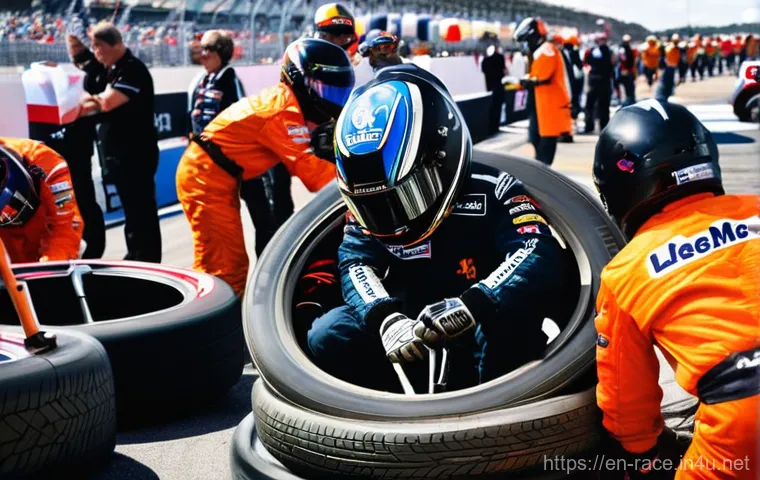
Real racing is inherently theatrical. It’s unscripted drama playing out in real-time, with real people, real emotions, and real stakes. Think about the tension on the grid as the lights go out, the frantic wheel-to-wheel battles where every inch matters, the strategic gambles that pay off or spectacularly fail, and the raw emotion of victory or defeat.
You see drivers celebrating with their families and teams, or slumping in disappointment after a DNF. These are genuine human reactions to high-pressure situations, something that’s incredibly compelling to witness and be a part of.
While sim racing can replicate the *tactics* of racing, it can’t quite capture the unpredictable human element: the rivalries that spill over from one race to the next, the unexpected acts of sportsmanship, or the sheer joy of watching a new talent emerge from the pack.
It’s this unfiltered, emotional spectacle that draws so many of us to motorsport, an experience that transcends mere competition and becomes a story about human endeavor.
Sensory Immersion: The Unreplicable Aspects
We’ve touched on sensory input before, but it bears repeating, and digging a little deeper into those truly unique, unreplicable elements that give real racing its distinct flavor.
While sim racing has made incredible strides in visual fidelity and haptic feedback, there are still layers of sensory information that are impossible to convey through a screen and a few actuators.
These aren’t just minor details; they’re fundamental to the holistic experience of controlling a powerful machine at its absolute limit. It’s the difference between hearing a description of a gourmet meal and actually tasting it – both provide information, but one offers a profound, immersive experience that engages all your senses in a way the other simply cannot.
For me, it’s those moments when all these disparate sensations converge into a singular, overwhelming torrent of input that truly define real racing.
A Feast for the Senses
Imagine this: you’re sitting in the cockpit, the engine roars to life just inches behind you, sending vibrations through your entire body. As you pull out of the pit lane, the sharp, metallic tang of hot brakes from another car fills the air.
On the main straight, the wind buffets your helmet, and the sheer speed creates a tunnel vision effect, even as you consciously process the blur of the trackside scenery.
Then, as you dive into a corner, you not only feel the G-forces pressing you into the seat, but you also catch the faint, intoxicating scent of burnt rubber as your tires briefly protest.
These aren’t just background elements; they’re crucial data points. The smell of oil might warn you of a problem, the feel of the wind helps you gauge speed, and the vibrations communicate the car’s every struggle and triumph.
This continuous stream of diverse sensory data creates an unbelievably rich and layered experience that a sim, no matter how advanced, can only hint at.
The Visceral Connection
The most profound unreplicable aspect, I believe, is the visceral connection you form with the machine itself. When you’re driving a real race car, you are literally strapped into a finely tuned instrument of speed and precision.
Every flex of the chassis, every groan from the suspension, every surge of power from the engine – you feel it directly, intimately. It’s not just feedback; it’s a conversation.
Your body becomes an extension of the car, and the car, in turn, becomes an extension of you. There’s a constant, almost subconscious dialogue happening between you and the vehicle, informing your inputs and shaping your reactions.
This deep, physical bond fosters an incredible sense of control and responsibility. You are directly responsible for guiding this powerful, dangerous, yet exhilarating machine, and that bond creates a thrilling intimacy that cannot be replicated by even the most sophisticated virtual setups.
It’s a connection born of shared risk, shared effort, and the raw, untamed power of physics.
Training Ground or True Test: Sim’s Role in Driver Development
It’s fascinating to see how the role of simulators has evolved in driver development. What was once considered merely a game or a niche hobby for enthusiasts has now become an indispensable tool in the arsenal of professional racing teams and aspiring drivers alike.
For young talents, access to a high-quality simulator can be a game-changer, offering a cost-effective way to hone skills, learn tracks, and understand car dynamics long before they ever get near a real race car.
I’ve heard countless stories of drivers who’ve gone from dominating sim leagues to making a real impact in junior formulas, leveraging their virtual experience to hit the ground running.
This isn’t to say it replaces real seat time – far from it. But it’s undeniably created a much more accessible pathway into motorsport, democratizing driver training to a certain extent.
The beauty of the sim is its iterative nature; you can make a mistake, rewind, and try again, something you definitely can’t do when you’re out on the track in a multimillion-dollar machine.
The Digital Curriculum
Think of sim racing as a highly advanced digital curriculum for aspiring racers. It allows you to practice endlessly without the prohibitive costs of real-world track time.
You can experiment with different car setups, learn how changes in downforce or suspension stiffness affect handling, and understand the nuances of tire pressure and brake bias.
More importantly, you can practice racecraft: defending your position, executing overtakes, managing tire wear over a long stint, and even navigating through traffic.
These are all crucial skills that can be repeatedly drilled in a simulator, building a strong foundation of knowledge and instincts. Many professional teams now use bespoke simulators that are incredibly accurate representations of their actual race cars, allowing drivers to provide feedback on setup changes and even simulate entire race weekends, including pit stops and fuel strategies.
This level of detail and practical application makes it an unparalleled learning environment for the technical and strategic aspects of racing.
The Stepping Stone to Stardom
For many, sim racing isn’t just a hobby; it’s a legitimate stepping stone towards a real racing career. Esports championships offer significant prize money and, more importantly, exposure.
Drivers who excel in the virtual world often catch the eye of real racing teams and sponsors. We’ve seen examples like Jann Mardenborough, who went from winning Nissan’s GT Academy to racing in endurance events like Le Mans.
While his journey is extraordinary, it highlights the potential for sim racing to identify and nurture raw talent that might otherwise go undiscovered due to financial barriers.
It provides a platform where skill alone can shine, without the immediate need for a massive racing budget. This isn’t a guarantee of a real racing career, of course, but it significantly widens the talent pool and offers a credible, albeit challenging, pathway for those with the drive and aptitude to compete at the highest levels of motorsport.
Beyond the Checkered Flag: The Long-Term Commitment
Finally, let’s talk about the long game, because both sim racing and real racing require a significant commitment, though in very different forms. For sim racing, the commitment is largely personal: dedicating hours to practice, learning car setups, and participating in online leagues.
It’s a continuous pursuit of self-improvement and competitive excellence within a digital landscape. You’re building skills, fostering relationships within the community, and often, investing in incrementally better hardware.
It’s a rewarding journey that can last for years, offering endless opportunities to compete and grow. However, real racing is a full-blown lifestyle commitment.
It demands not just your time and money, but often your entire focus. It shapes your schedule, impacts your finances, and becomes a central pillar of your identity.
It’s a much more public endeavor, with teams, sponsors, and fans, and the long-term journey involves navigating these complex relationships alongside the pursuit of on-track success.
The Endurance of the Enthusiast
As a sim racing enthusiast, the long-term commitment often translates into a continuous quest for improvement and immersion. I’ve spent years refining my technique, trying new titles, upgrading my rig piece by piece, and finding new communities to race with.
It’s a hobby that evolves, keeping me engaged and constantly learning. The beauty is its flexibility – I can jump into a race for an hour after work, or dedicate an entire weekend to an endurance event.
It fits into life’s demands, offering a consistent outlet for my passion for speed without demanding the kind of logistical nightmare that real racing often entails.
This longevity is what makes sim racing so appealing; it’s an accessible way to keep that racing flame burning brightly for the long haul, without needing to remortgage your house or take a sabbatical from your job.
It’s a journey of continuous personal challenge and digital competition that can literally last a lifetime.
The Marathon of Motorsport
Real motorsport, on the other hand, is a true marathon, not a sprint. The commitment extends far beyond the race weekend itself. It involves rigorous physical training to withstand the G-forces and heat, meticulous planning for travel and logistics, continuous car maintenance and development, and the relentless pursuit of funding and sponsorship.
For professional drivers, it’s a career that often begins in childhood, progresses through various junior formulas, and demands unwavering dedication for decades.
Even for passionate amateur racers, the off-season is just as important as the racing season, filled with car preparation, budget management, and skill development.
It’s a lifestyle that often requires significant sacrifices – personal time, financial stability, and sometimes, even other career opportunities. But for those who commit to it, the rewards are immense: the thrill of competition, the bonds of teamwork, and the deep satisfaction of pushing human and mechanical limits.
It’s a test of endurance in every sense of the word, demanding unwavering passion and a commitment that runs bone-deep.
Wrapping Things Up
Whew, what a ride, right? Exploring the nuanced world of sim racing versus real racing truly highlights how both paths offer incredible thrills, albeit in vastly different ways. As someone who’s lived and breathed both, I can confidently say neither entirely replaces the other; instead, they complement each other beautifully. Sim racing offers an unparalleled training ground and an accessible avenue for passion, while real racing delivers that raw, visceral, full-sensory assault that simply can’t be replicated. Ultimately, whether you’re chasing milliseconds on a screen or battling for position on the asphalt, the spirit of motorsport binds us all.
Handy Tips You’ll Be Glad You Knew
1. Start with Sim: If you’re new to racing, dipping your toes into sim racing is by far the most cost-effective and safest way to learn the ropes. Invest in a decent wheel and pedal set, and dedicate time to understanding driving lines and car control before even thinking about a track day.
2. Track Day Essentials: For your first real track day, focus on learning, not speed. Rent a helmet, get a basic safety inspection, and most importantly, listen to your instructors. They’re there to help you stay safe and improve your skills. Don’t push beyond your comfort zone.
3. Budget Wisely: Real racing can be a money pit, so create a detailed budget and stick to it. Factor in everything: tires, fuel, entry fees, maintenance, and a contingency fund for unexpected repairs. It’s always more expensive than you think!
4. Join a Community: Whether it’s online sim racing leagues or local car clubs, connecting with fellow enthusiasts enriches the experience immensely. You’ll find mentors, friends, and invaluable advice that speeds up your learning curve.
5. Physical Conditioning Matters: Even for sim racing, being physically fit helps with focus and endurance. For real racing, it’s non-negotiable. Core strength, neck exercises, and cardiovascular fitness will dramatically improve your performance and reduce fatigue.
Key Takeaways for the Aspiring Racer
In essence, our journey through the realms of virtual and real racing reveals that while both share the fundamental thrill of speed, they diverge significantly in experience, cost, and sensory engagement. Sim racing excels as a low-barrier entry point, a fantastic training ground for technique, strategy, and muscle memory, allowing for endless, consequence-free practice. It’s a vibrant community and a powerful tool for driver development, offering a taste of the racing world without breaking the bank. On the other hand, real racing delivers an unquantifiable, full-body sensory immersion, a raw physical challenge, and a profound psychological weight of risk that creates an unparalleled, visceral connection between driver and machine. The costs are exponentially higher, the commitment is a lifestyle, and the human element in the paddock is tangible and deep. Both avenues foster a passionate pursuit of excellence, but understanding their distinct attributes is crucial for anyone looking to truly engage with the exhilarating world of motorsport.
Frequently Asked Questions (FAQ) 📖
Q: uestionsQ1: How realistic is sim racing compared to real racing, really?
A: Oh, this is the million-dollar question, isn’t it? And honestly, the answer is a massive “it depends,” but let me tell you, modern sim racing is ridiculously close in so many ways!
When I first started messing around with sims years ago, it felt like a game. Now? It’s a whole different beast.
The visual fidelity, the incredible sound design that pulls you right into the cockpit, and especially the force feedback wheels and pedals – they’ve advanced to a point where you feel the tires gripping, sliding, and even the subtle vibrations of the track.
You can absolutely learn a track, understand braking zones, and practice your lines to perfection. I’ve spent hours meticulously tuning a virtual car, and then, feeling the same nuances of oversteer or understeer that I’d expect in real life, it’s just mind-blowing.
However, and this is a big however, the one thing no sim can truly replicate is the physical sensation of G-forces. That gut-wrenching feeling as you brake hard, the lateral forces pushing you into your seat through a high-speed corner, and the sheer fatigue that sets in after a few laps?
That’s purely a real-world experience. Plus, there’s no real fear of consequences in a sim – you can hit the reset button. In real life, every mistake could cost you big, financially or even physically.
So, while it’s incredibly realistic, especially for mental preparation and skill refinement, it still can’t fully replicate the full sensory assault and physical demands of actual racing.
Q: Can sim racing actually prepare you for real-world track driving?
A: Absolutely, and I can tell you from countless conversations and personal observations, it’s not just a “nice to have” anymore – it’s practically essential for anyone serious about real-world racing.
Think about it: before you even step foot on a track, you can log hundreds of laps virtually, learning every single corner, apex, and braking marker. I’ve seen drivers who have never been to a particular track in real life get within a second or two of lap records purely because they’ve mastered it in the sim.
It builds muscle memory for steering inputs, throttle control, and even race craft against other drivers. Pro racers use simulators all the time to learn new tracks, test setups, and stay sharp between races.
My own experience is that it drastically shortens the learning curve. You show up on track day with confidence, knowing the layout intimately, instead of spending precious (and expensive!) track time just trying to figure out where the track goes.
It’s like studying for a big exam – you wouldn’t just show up cold, would you? Sim racing is your ultimate study guide. Of course, it can’t prepare you for the physical toll, the heat, the real danger, or the nuanced “seat of the pants” feel that only a real car provides, but for pure mental preparation and technique honing, it’s an unparalleled tool.
Q: What are the biggest differences a sim racer would notice stepping into a real race car?
A: Oh man, where do I even begin? If you’re a dedicated sim racer who thinks they’ve “got this” from their rig, the moment you strap into a real race car for the first time will be a revelation – a beautiful, terrifying, and exhilarating one!
The absolute first thing that hits you is the sensory overload. In the sim, it’s all through your screen and headphones. In real life, it’s everything at once: the deafening roar of the engine vibrating through your entire body, the intoxicating smell of race fuel and hot tires, the intense heat radiating from the engine bay, and the sheer violence of acceleration and braking.
You quickly realize your sim rig doesn’t have the real G-forces that slam you back into your seat under acceleration, push you sideways in corners, or try to rip your head off under heavy braking.
Those forces are real, and they’re exhausting. You feel every bump, every ripple in the asphalt directly through the chassis, your seat, and your hands on the wheel in a way no force feedback system can truly mimic.
And then there’s the consequences. That little mistake in the sim? You hit rewind.
That little mistake on track? It could be a crumpled fender, a huge repair bill, or worse. The fear, the adrenaline, the absolute focus required because everything is on the line – that’s something unique to real racing.
It truly separates the wheat from the chaff, and it’s why I respect every single real-world racer out there. It’s an incredible experience, but it’s a stark reminder that while sims are incredibly close, they’re still a controlled environment.