Wow, what a wild ride it’s been in the world of virtual asphalt and roaring engines lately, hasn’t it? Every time I log on, it feels like there’s something new to discover, a fresh challenge waiting to be conquered, or a stunning new vehicle to add to my ever-growing garage.
It’s not just about the shiny new cars, though. I’ve personally noticed a huge push towards deeper realism, immersive weather effects that actually make you second-guess your braking points, and even community-driven events that truly make you feel like part of something bigger.
It’s amazing how developers are listening to us, the players, and constantly upping their game to deliver experiences that go beyond just racing. From what I’ve seen, the future of racing games is looking incredibly bright, with advancements in AI and even haptic feedback promising to blur the lines between virtual and reality even further.
If you’re anything like me, you’re probably itching to know what’s coming next and how these changes will impact your favorite titles. Let’s find out exactly what’s accelerating our gaming experience!
The Unrelenting Quest for Realism: Where Virtual Meets Reality
You know, one thing that absolutely blows my mind every time I fire up a new racing title is just how far we’ve come in terms of realism. It wasn’t that long ago that “realistic” meant a fancy paint job and a somewhat believable engine sound.
Now? We’re talking about physics engines that accurately model tire degradation down to the compound, weather systems that genuinely alter track conditions dynamically, and graphics that make me do a double-take to remember I’m not actually looking out of a windshield.
I’ve spent countless hours meticulously tweaking car setups, feeling every subtle shift in weight transfer, and wrestling with force feedback that truly mimics the sensation of fighting for grip.
It’s an immersion level that previous generations could only dream of, and honestly, it makes every victory, every perfectly executed overtake, feel incredibly earned.
The sheer dedication developers put into these details is astounding, and it’s what keeps me coming back for more, constantly chasing that perfect lap.
It’s not just about looking good; it’s about feeling good, about the tactile feedback, the auditory cues, and the raw sensation of being behind the wheel.
We’re really on the cusp of something extraordinary, aren’t we?
Beyond the Pixels: Unpacking Next-Gen Graphics
Let’s be real, the visual fidelity in today’s top-tier racing games is simply breathtaking. I remember the days when a car model was a blocky silhouette; now, we have meticulously rendered interiors, reflections that bounce off every surface with stunning accuracy, and environmental details that make each track feel alive.
The way ray tracing handles light in real-time, casting hyper-realistic shadows and glints off polished chrome, completely transforms the experience. When I’m screaming down a straight at Monza, the trees blurring past, the sun glinting off the tarmac, it’s almost meditative.
It’s not just eye candy, though; these graphical leaps contribute to better spatial awareness, helping you judge distances and track limits with greater precision, which is absolutely crucial when you’re pushing the limits.
Developers are pushing consoles and PCs to their absolute maximum, and as a player, it’s thrilling to witness.
Feel Every Apex: The Evolution of Physics Engines
For me, the true heart of any great racing game lies in its physics engine. And wow, have they evolved! Gone are the days of feeling like your car is floating on ice.
Now, every bump, every curb, every bit of oversteer is communicated through your steering wheel, making you a vital part of the car’s dynamic dance. I’ve personally experienced moments where a subtle change in camber or toe angle made a noticeable difference in how the car behaved through a fast corner.
It’s that depth, that intricate modeling of real-world mechanics, that truly separates the casual racers from the serious simulators. It’s a steep learning curve sometimes, but mastering a car’s unique characteristics and finding that sweet spot where you’re just on the edge of grip is one of the most rewarding feelings in all of gaming.
It demands focus, quick reflexes, and a deep understanding of vehicle dynamics.
Esports Arenas and Community Leagues: Racing Goes Pro
It’s been absolutely incredible to watch the racing game scene evolve from living room bragging rights to massive, globally recognized esports events.
What started as competitive online lobbies among friends has blossomed into professional leagues with serious prize pools, dedicated broadcast teams, and sponsorships from major automotive brands.
I’ve seen some absolutely jaw-dropping races, nail-biting finishes, and incredible displays of skill that would rival any real-world motorsport. It’s not just the pros, either; the sheer number of community-run leagues and online championships is staggering.
I’ve dipped my toes into a few myself, and there’s nothing quite like the camaraderie and intense competition you find there. The stakes might not be millions of dollars, but the pride of beating your buddies or climbing the ladder in a well-organized series?
That’s priceless. This thriving ecosystem is a testament to how seriously people take their virtual racing, and it’s brought a whole new level of excitement and structure to our passion.
From Bedroom to Big Stage: The Rise of Sim Racing Esports
The transformation of sim racing into a legitimate esport has been nothing short of phenomenal. When I started out, the idea of people watching others play racing games seemed wild.
Now, we have dedicated channels, expert commentators, and professional drivers who got their start in the virtual world. The sheer precision and consistency required to compete at that level are mind-boggling.
I’ve watched documentaries about pro sim racers’ training regimens, and it’s as intense as any physical sport. They analyze telemetry, practice countless hours, and finely tune their setups to shave off milliseconds.
It’s a testament to the realism of these games that the skills honed virtually can even translate to real-world driving for some talented individuals.
The accessibility of sim racing platforms means anyone with the dedication can potentially rise through the ranks.
Building Bridges: Community-Driven Events and Friendships
Beyond the glitz and glamour of professional esports, the heart of competitive racing really lies in its community. I’ve forged some fantastic friendships through online leagues and casual race nights.
There’s a shared passion that transcends geographical boundaries. Whether it’s organizing endurance races, setting up a weekly time trial challenge, or simply sharing tips on car setups, the community aspect is incredibly strong.
I’ve seen countless examples of players helping each other improve, offering constructive criticism, and even cheering on rivals. It’s this sense of belonging, this shared journey through the virtual asphalt, that truly elevates the experience.
It makes every lap feel more meaningful when you know you’re part of something bigger, a global network of enthusiasts just as obsessed with speed and precision as you are.
Your Garage, Your Rules: Unlocking Unprecedented Customization
If there’s one thing that truly makes a racing game feel like *mine*, it’s the ability to customize. And honestly, developers have been absolutely crushing it lately when it comes to giving us the tools to make our rides truly unique.
It’s not just about slapping on a new paint job anymore; we’re talking about deep, intricate systems that let you tweak every aesthetic detail, from rim designs and caliper colors to the exact angle of your spoiler and the material of your interior trim.
Beyond the looks, the performance customization often feels like being a real race engineer. Adjusting gear ratios, suspension stiffness, brake bias – it’s all there, allowing you to fine-tune your vehicle to your specific driving style and the demands of each track.
This level of personalization creates a much deeper connection to your virtual fleet, making every car feel like an extension of yourself. It truly enhances replayability, letting you experiment endlessly to find that perfect balance of speed and handling.
Crafting Your Dream Ride: Deep Customization Systems
The sheer depth of customization options available in modern racing games is astounding. I can spend hours in the livery editor, meticulously recreating iconic designs or coming up with something entirely original.
And it’s not just liveries; being able to swap out body kits, adjust ride height, or even choose different exhaust notes makes each car feel distinct.
It’s a fantastic outlet for creativity and a way to express your personality on the track. For me, dialing in the perfect stance or finding a wheel and tire combo that just *looks* right is almost as satisfying as setting a new personal best.
It’s that blend of aesthetic freedom and performance tweaking that keeps me hooked, always wondering what cool new look or setup I can conjure up next for my favorite speed machine.
The Modding Scene: Breathing New Life into Old Favorites
While official customization options are fantastic, we absolutely cannot overlook the incredible contributions of the modding community. These unsung heroes inject boundless creativity and an almost endless supply of new content into our beloved racing titles.
From completely new car models and meticulously recreated tracks to subtle physics tweaks and graphical enhancements, modders keep games fresh and exciting for years beyond their official release cycles.
I’ve personally downloaded countless mods that have dramatically extended the lifespan of some of my favorite older titles, allowing me to experience them in completely new ways.
It’s a powerful testament to the passion of the player base and a brilliant example of how user-generated content can enrich the gaming experience for everyone.
Beyond the Finish Line: Live Service and What Keeps Us Coming Back
It feels like racing games these days are never truly “finished,” and I mean that in the best possible way. The move towards live-service models has meant a constant stream of new content, from fresh cars and tracks to seasonal events and challenges that keep things exciting.
It’s a different beast from the old days of buying a game and that being that. Now, I’m always looking forward to the next update, wondering what new championship or special vehicle challenge awaits.
This continuous evolution keeps the community engaged, gives us fresh goals to chase, and ensures that our garages are always expanding with the latest and greatest.
Of course, it also means a steady stream of decisions about what to buy, what season pass to invest in, and which limited-time events are truly worth my precious time.
Seasonal Content and the Ever-Evolving Track List
One of the things I truly appreciate about the live-service model is the way it keeps the content fresh. Seasonal updates often bring not just new vehicles but also new events, challenges, and sometimes even brand-new tracks to master.
It’s like getting a mini-expansion every few months, breathing new life into the game. I love diving into a new season, seeing what challenges are available, and testing my skills against the latest additions.
It helps prevent stagnation and gives me a reason to keep logging in, even when my free time is limited. This consistent influx of content ensures that there’s always something new to strive for, whether it’s a rare car reward or climbing the leaderboard in a new competitive series.
The Value Proposition: Smart Monetization or Empty Pockets?
Let’s talk about the elephant in the garage: monetization. While I love the continuous flow of new content, it’s also important to consider the value.
Some games do it brilliantly, offering optional car packs and season passes that genuinely enhance the experience without feeling like a greedy cash grab.
Others… well, they can sometimes push the boundaries, making you feel like you’re constantly nickel-and-dimed. As a player, I’m always weighing the cost against the enjoyment.
Is this new car pack going to give me hours of fun, or is it just another vehicle I’ll drive once and forget? It’s a delicate balance, and the developers who get it right are the ones who earn my continued loyalty and, more importantly, my money.
Driving Innovation: How Hardware is Redefining Immersion
Okay, can we just take a moment to appreciate how far gaming hardware has come? It’s not just about faster processors or prettier graphics anymore; it’s about tangible, physical feedback that truly blurs the line between virtual and reality.
I still remember the first time I felt proper haptic feedback in a modern controller, or the sheer visceral jolt of a high-end force feedback wheel. It wasn’t just a rumble; it was directional, nuanced, giving me genuine cues about tire grip and road surface.
Then there’s the whole VR phenomenon – strapping on a headset and being *inside* the cockpit, with full peripheral vision and a true sense of scale. It’s an experience that’s hard to describe if you haven’t tried it, but it completely transforms how you approach racing.
It’s these innovations, these technological leaps, that truly make me excited for the future, imagining what other ways we’ll be able to connect with our virtual machines.
Haptic Feedback: Feeling the Road Like Never Before
Honestly, if you haven’t experienced truly advanced haptic feedback in a racing game, you’re missing out. It’s so much more than a simple vibration. My controllers now communicate the texture of the tarmac, the subtle judder of hitting a rumble strip, and even the distinct feel of shifting gears.
With a high-quality force feedback wheel, it’s even more profound – you can feel the tires fighting for grip, the steering getting lighter as you lose traction, the thud of impact.
It’s that level of nuanced physical information that genuinely enhances the immersion and, crucially, improves your driving. I’ve noticed a significant improvement in my lap times when I can *feel* what the car is doing, rather than just seeing it on screen.
VR and Beyond: Stepping Inside the Cockpit
Virtual Reality in racing games is a complete game-changer, and I can say that from personal experience. The first time I put on a VR headset and found myself sitting inside a beautifully rendered cockpit, with the track stretching out before me in true 3D, it was jaw-dropping.
The sense of speed, the ability to naturally look through apexes, and the sheer scale of the cars and environments are incomparable. It feels less like playing a game and more like *being there*.
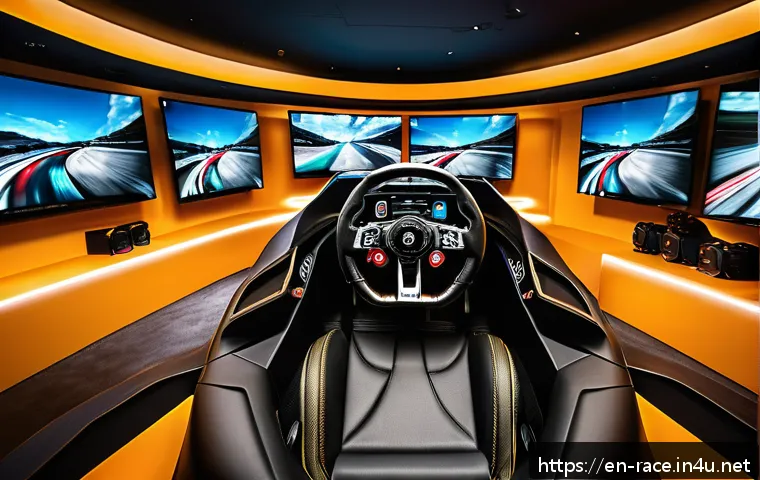
While it still has its quirks, the continuous advancements in VR technology are only making the experience more compelling. I truly believe that for the ultimate immersion in racing, VR is the way to go, offering a level of presence that 2D screens just can’t match.
| Feature | Entry-Level Sim | Mid-Range Sim | High-End Sim |
|---|---|---|---|
| Graphics Quality | Good, functional | Very good, detailed | Stunning, photorealistic |
| Physics Engine Fidelity | Basic, forgiving | Realistic, challenging | Hyper-realistic, demanding |
| Force Feedback Support | Basic rumble | Detailed road feel | Highly nuanced, directional |
| Car Customization | Limited cosmetic | Moderate cosmetic & performance | Extensive cosmetic & deep performance |
| Multiplayer Community | Casual lobbies | Active, league-focused | Highly competitive, esports-ready |
| Typical Cost (Game + DLC) | $30 – $60 | $70 – $150 | $100 – $300+ |
What’s Next for Our Need for Speed: The Road Ahead
It’s truly exciting to contemplate what the future holds for racing games. With every passing year, the lines between simulation and reality become increasingly blurred, and the innovation just keeps coming.
I often find myself daydreaming about what new technologies will revolutionize our beloved genre next. Will it be even more sophisticated AI drivers that truly learn and adapt?
Or perhaps full body haptic suits that let us feel g-forces and impacts? The possibilities are endless, and knowing how dedicated these developers are to pushing boundaries, I’m confident we’re in for some truly mind-blowing experiences.
The passion of the community, coupled with relentless technological progress, guarantees that our virtual racetracks will continue to be vibrant, challenging, and endlessly thrilling for years to come.
Beyond the Track: Expanding the Racing Universe
One trend I’ve been noticing, and one that I’m personally super excited about, is the expansion of what “racing game” actually means. It’s not just about pure track racing anymore.
We’re seeing more games incorporating robust career modes with team management elements, open-world exploration with diverse challenges, and even narrative-driven experiences that add a whole new layer of depth.
It’s about building a richer universe around the act of driving, giving us more reasons to engage beyond just setting lap times. I love that developers are experimenting with these broader concepts, because it means there’s something for every kind of gearhead, whether you’re a hardcore sim enthusiast or someone who just wants to cruise and explore.
The Evolution of AI: Smarter Rivals and Dynamic Races
The AI in racing games has come a seriously long way, and it’s only getting better. I remember when AI drivers were predictable, often following a fixed line, making overtakes feel a bit too easy.
Now, we have AI that genuinely challenges you, that makes mistakes, that fights for position, and even adapts to your driving style. It creates incredibly dynamic and exciting races, making every victory feel hard-fought.
I’m particularly keen to see how machine learning continues to influence AI development, potentially leading to opponents that are virtually indistinguishable from real human drivers.
Imagine AI that learns your weaknesses, that anticipates your moves – that would be absolutely phenomenal and would push us all to become better racers.
Wrapping Up Our Journey
So, there you have it, fellow gearheads! What an incredible ride we’ve been on, exploring the cutting edge of virtual racing. From the breathtaking realism of today’s graphics and physics to the vibrant heart of its esports and passionate communities, it’s clear this genre is not just surviving, but absolutely thriving. I honestly feel like we’re just scratching the surface of what’s possible, and that constant pursuit of perfection is what keeps me utterly hooked. Whether you’re chasing milliseconds on the leaderboard or just enjoying the thrill of a perfect apex, the journey in sim racing is as rewarding as it gets, and I wouldn’t trade it for anything.
Insider Tips for Your Virtual Garage
1. Invest in quality peripherals: Seriously, a good force feedback wheel and pedals can transform your experience. It’s not just about immersion; it gives you crucial tactile feedback that helps you become a better, faster driver. Don’t cheap out if you can help it, because the difference between a basic controller and a proper setup is truly night and day. It enhances every single moment on the track, making your playtime more valuable and enjoyable.
2. Join a community: Whether it’s a dedicated Discord server, a popular online forum, or a local league, connecting with other racers is absolutely invaluable. You’ll find a wealth of setup tips, opportunities for competitive races, and an amazing sense of camaraderie that makes the whole experience so much richer. Plus, more engagement often means more time spent in-game, which is a win-win for everyone involved in this awesome hobby.
3. Experiment with settings: Don’t just stick to the defaults. Dive into the graphics, audio, and especially the car setup menus. Small, methodical tweaks to your car’s suspension, aerodynamic settings, or gear ratios can make a profound difference to its handling and your lap times. It’s a continuous journey of discovery and a core part of becoming a truly skilled sim racer, allowing you to tailor the experience precisely to your style.
4. Watch the pros: Seriously, there’s so much to learn from watching top sim racers. Observe their racing lines, braking points, throttle application, and how they manage tire wear over a long stint. Many stream on platforms like Twitch or YouTube, often offering commentary and insights you won’t get anywhere else. It’s like getting a free, high-level coaching session directly from the best in the business.
5. Embrace the grind: Getting truly good at sim racing takes time, patience, and dedicated practice. You won’t be a world champion overnight, and honestly, that’s perfectly okay! Enjoy the process of learning, improving, and celebrating those small, incremental victories. The satisfaction of finally mastering a new track, shaving off a few tenths, or conquering a particularly challenging car is truly unmatched and makes every hour worth it.
The Finish Line: Key Takeaways
Ultimately, the world of virtual racing is a dynamic and ever-evolving landscape that genuinely offers something for every kind of enthusiast. We’ve witnessed a monumental leap in realism, driven by cutting-edge graphics and deeply intricate physics engines that demand skill and finesse from us as drivers. The rise of esports has well and truly legitimized sim racing as a serious competitive pursuit, while vibrant community leagues foster incredible friendships and a shared passion for speed that spans the globe. Unprecedented customization options allow us to truly make our mark, transforming our virtual garages into unique personal expressions. And with continuous live service updates and groundbreaking hardware innovations, the future promises even deeper immersion and endless thrills, ensuring our virtual engines will keep roaring for years to come. So, buckle up, because the best laps are still ahead, and I can’t wait to see what adventures await us on the virtual asphalt!
Frequently Asked Questions (FAQ) 📖
Q: What are the biggest trends making racing games feel genuinely more real and immersive these days?
A: Oh man, where do I even begin? From my perspective, having clocked countless hours in virtual cockpits, the drive for realism is hitting new highs. It’s not just about sharper graphics anymore, though those are definitely incredible with things like ray tracing making every reflection pop.
What really blows my mind is how sophisticated the physics engines have become. I’ve personally felt the difference when my tires lose grip dynamically on a rainy track, or when the weight transfer of my car feels spot-on during a high-speed corner.
Developers are painstakingly replicating real-world vehicle dynamics, which means every twitch of the wheel, every brake input, feels consequential. And let’s talk about immersion beyond just visuals!
The introduction of truly dynamic weather systems, where a clear sky can turn into a torrential downpour mid-race, doesn’t just look cool; it completely changes your strategy.
I remember one race where a sudden fog rolled in, forcing me to totally rethink my braking points – it was exhilarating and a little terrifying! Then there’s the haptic feedback we’re seeing in newer controllers, like the PlayStation’s DualSense.
Feeling the subtle vibrations of different road surfaces, the crunch of gravel under the wheels, or the distinct ‘thump’ when you shift gears? That’s next-level immersion that really makes you feel like you’re in the car, not just playing a game.
These aren’t just features; they’re experiences that genuinely blur the lines between virtual and reality, making every race an adventure.
Q: How are community engagement and
A: I advancements changing the game, not just for competitive players, but for casual racers too? A2: That’s a fantastic question, and it touches on something I’ve seen evolve tremendously over the years.
For a long time, racing games were pretty solitary affairs if you weren’t into competitive online lobbies. But now? It feels like we’re part of a massive, global car club!
Developers are really leaning into community-driven events, custom leagues, and even shared content creation. I’ve spent hours just browsing incredible livery designs made by other players, and participating in weekly challenges that push me outside my comfort zone.
It genuinely fosters a sense of belonging, and it’s brilliant for keeping the game fresh long after release. But what about when you just want to kick back and race solo?
This is where AI has made staggering leaps. Gone are the days of predictable, robotic opponents who stick to a perfect racing line. Modern AI opponents, like the Drivatars in Forza or the advanced AI in F1 games, actually learn from player data.
This means they can make mistakes, take aggressive lines, and even adapt to your driving style. I’ve had races against AI that felt as intense and unpredictable as racing a real person, which is incredibly satisfying.
It provides a consistently challenging and engaging experience, whether you’re a seasoned sim racer or just someone who enjoys a casual drive after a long day.
It truly feels like the games are playing with you, not just against you.
Q: With all these exciting changes, how can I best prepare my setup for the future of racing games, and will my current gear be obsolete soon?
A: I totally get that concern! It’s easy to feel like you need the latest and greatest to keep up, but honestly, it’s not always about a complete overhaul.
My advice? Start by optimizing what you already have. Make sure your system drivers are updated, especially for your graphics card.
Tweak your in-game settings; sometimes a slight reduction in a non-critical visual setting can significantly boost performance and ensure a smoother experience with new features.
If you’re on a console, ensure you’re on a next-gen system (PS5, Xbox Series X/S) to fully take advantage of those haptic feedbacks and faster load times.
For PC players, investing in a solid-state drive (SSD) is one of the most impactful upgrades you can make for overall game performance and loading screens, if you haven’t already.
As for your current gear becoming obsolete, I wouldn’t rush to conclusions. While new wheels, pedals, and VR headsets offer incredible fidelity, many developers are still designing games to be accessible across a range of hardware.
So, your trusty racing wheel and pedal set might still serve you wonderfully for quite some time, especially if it’s from a reputable brand. My personal take is to enjoy what you have, keep an eye on hardware reviews and game requirements, and when you feel your current setup is genuinely holding you back from experiencing a new game feature, that’s when you start looking at those exciting upgrades!
It’s all about enhancing your enjoyment, not chasing every single new piece of tech.